
The following is a reprint of an email sent to dearOldCampLewis@gmail.com
On Thu, Feb 12, 2026 at 5:15 PM tom mckenzie <tomrascal2014@gmail.com> wrote:
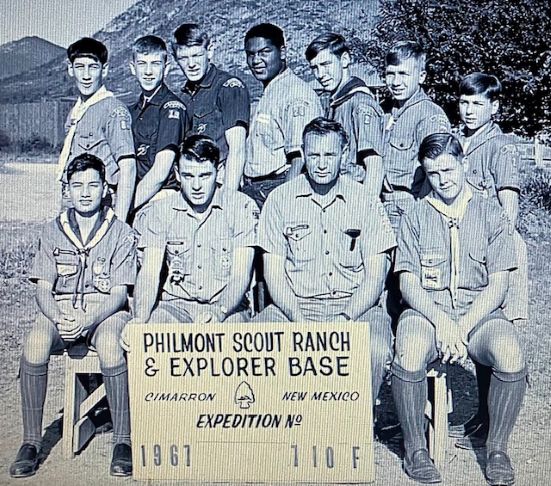
Hi, To whomever this may concern. I came across this post of your group to Philmont in 1967 710-F. I was your Ranger Tom McKenzie from Virgil, Kansas, Troop 276, Quivira council out of Wichita, Kansas.
Over the years I have wondered if any of the campers ever came back to work at Philmont !!! I was a Ranger 1966-1967. Then I was in the Vietnam War 1968-69. At least I had two good years at Philmont. Scouting gives me an opportunity to go places and meet people from other walks of life.
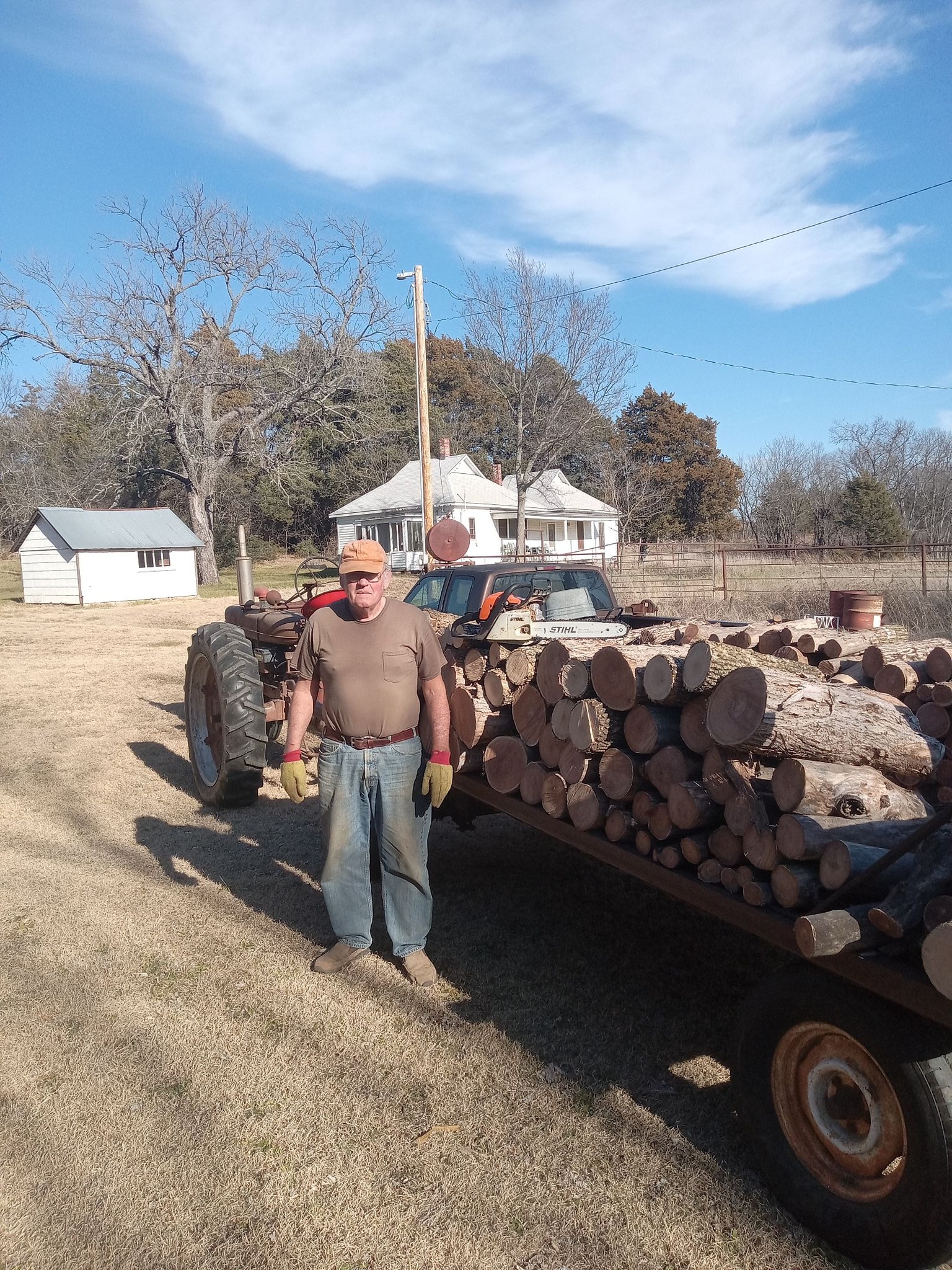
The photo is of me at the farm where I grew up. It is 7 miles from Virgil. I'm still upright and going strong !!!
Thank you,
Tom
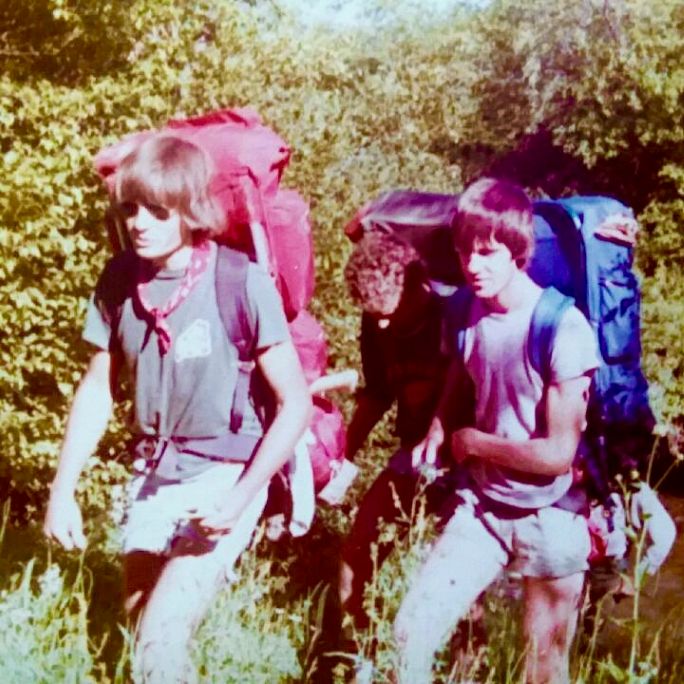
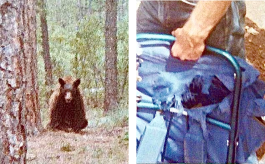
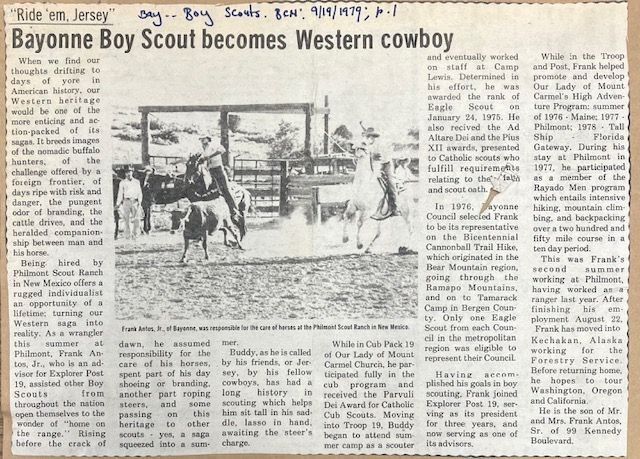
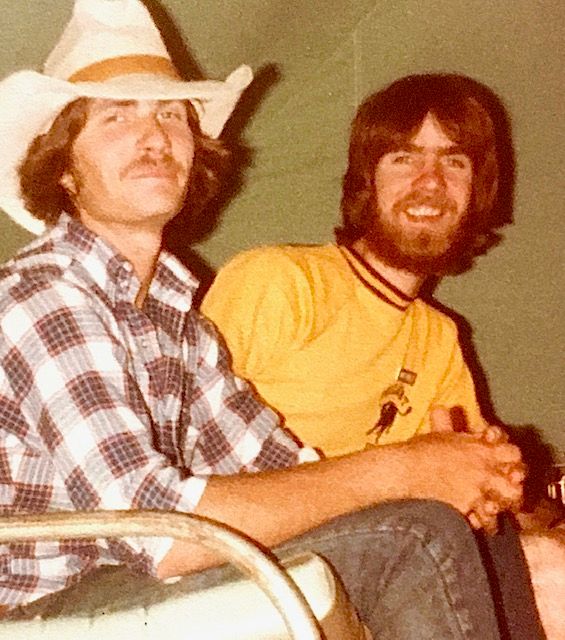
Looking back, Mike Hurley shares this memory...
"When Buddy and I got to Philmont as staff members in May of 1979, there was still snow in the higher elevations and I recall the ranch managers telling us to keep an eye out for aircraft wreckage while in the backcountry. By July the snow melted and the aircraft was located."
A few months later, a local news media reported the following...
11-29-78 - Private Piper aircraft en route to Albuquerque destroyed when it crashed into mountainous terrain at Philmont Scout Ranch, NM. Two passengers, two fatalities. NTSB found weather was a factor along with inexperience of pilot. Pilot attempted operation beyond ability level and lacked instrument ratings. Aircraft recovered 7-15-79.
Lucien Bonaparte Maxwell (1818-1875) was a rancher and entrepreneur who at one point owned two million acres of land in New Mexico. Maxwell left home at the age of 15 and traveled west. He met and became fast friends with Kit Carson, and in 1841 both signed up with John Fremont for western expeditions, with Carson serving as guide, and Maxwell as chief hunter.
In 1844, while in Taos, New Mexico, Lucien met, and married, Luz Beaubien, daughter of Carlos Beaubien.
Beaubien and his partner, Guadalupe Miranda, had received a land grant in northeast New Mexico in 1843. The grant was the largest ever made and created more than its share of complaints and controversy. Two times larger than the State of Rhode Island, the area included the towns of Cimarron, Springer, Raton and Elizabethtown in New Mexico, as well as Segundo and other towns in Colorado. Beaubien's wedding gift to his daughter and Maxwell was 15,000 acres.
Maxwell settled down on the land and built a ranch at Rayado (now a museum managed by Philmont staff). He and his wife had five children - four daughters and a son. He kept the best stock of cattle, horses, sheep and goats. His ranch manager would become well known in later years as Buffalo Bill Cody.
Rayado was the first settlement east of the Sangre de Cristo Mountains and became a stagecoach and wagon stop along the Santa Fe Trail. By all accounts, Maxwell was a friendly enough man and often invited travelers into his house.
In 1864, after the death of his father-in-law, Maxwell and his wife bought out the other heirs for amounts ranging from $3,000 to $6,000. Eventually, the Maxwell's owned the entire grant, paying a total of about $35,000 for two million acres, which made them the largest land owners in the world. He made Cimarron his headquarters.
He built a house in Cimarron which was as large as a city block. This was not only his home, but a place of business which included a hotel, gambling rooms, saloon, dance hall, billiard parlor, and an area for women of "special virtue." Maxwell's extravagant lifestyle was a marvel of the region where simple log and adobe houses were the norm.
In 1866 copper was discovered on Baldy Peak, just west of Maxwell's ranch, and the value of the Maxwell Land Grant dramatically increased. Maxwell got involved with the mining activities and joined William Moore, the founder of Elizabethtown, and others in 1867, to form the Copper Mining Company. The company began to extract ore from Baldy Peak and soon found the first load of gold. The "gold fever" had taken root. Elizabethtown was growing by leaps and bounds with the great number of people storming the area in search of their fortunes and Maxwell was collecting rents and royalties from the miners, further adding to his vast wealth.
In 1869 Maxwell began to look at the possibility of selling the grant, and in 1870 sold the property and purchased the abandoned Fort Sumner in eastern New Mexico. He remodeled the Fort’s officer's quarters into a luxurious home with twenty rooms.
After Lucien died in 1875, his Fort Sumner mansion became the home of his only son, Peter. Peter continued managing the family's cattle and sheep ranching operations, but he mostly lived quietly in the shadow of his famous father.
One of Maxwell’s daughters, Paulita, lived with her older brother at the fort. At some point, she became an acquaintance of William Bonney, better known as Billy the Kid, who spent much time in New Mexico.
Bonney was a notorious killer and was ultimately captured by Sheriff Pat Garrett and - convicted of murder - sentenced to hang in May 1881. However, on April 28, Bonney escaped from jail, killing two sheriff's deputies in the process.
By all accounts, Paulita worshipped Bonney and the two were frequently seen together. Many historical accounts note a steamy and illicit romance between the two with Paulita becoming pregnant. There seems to be much conjecture on this point however, as there are no documented records of a birth.
Peter, while reportedly friendly with Bonney, never approved of his sister’s relationship, and it is widely believed that Peter set up Bonney in an attempt to keep the two apart, not wanting to sully his family's name with the association of such an infamous outlaw.
On July 14, 1881, Sheriff Pat Garrett - on the hunt for Bonney - tracked him to Fort Sumner, where he met with Peter Maxwell for several hours. Accounts vary as to the exact course of events, but the most common version states that Garrett was in the Maxwell home around midnight when Bonney - who was visiting with Paulita - sleepily stumbled out of a bedroom to use the bathroom. Garrett fired two shots, one striking Bonney in the chest, killing him.
After mourning Bonney’s death, Paulita married Jose Jaramillo, a more adequate suitor in Peter's eyes.
Eventually people began to claim that Garrett unfairly ambushed Bonney. Garrett felt the need to tell his side of the story, and called upon a journalist friend to ghostwrite a book for him. The collaboration led to the book The Authentic Life of Billy the Kid, which was first published in 1882. The book became a reference for historians who later wrote about Bonney's life.
Lucien Maxwell's home in Fort Sumner is long gone and the famous land baron lies buried in an almost forgotten corner of the dusty Fort Sumner cemetery, along with his son Peter who died in 1898, Paulita who died in 1929, and Bonney.
As for the Maxwell land, during the 1900's it was gradually subdivided, and ranchers and loggers bought the property. In 1922, much of the land was purchased by Oklahoma oil millionaire Waite Phillips. Phillips spent six months of each year on the ranch and eventually amassed over 300,000 acres, naming it Philmont, which is based on a combination of his name and the Spanish word for mountain - “monte."
Phillips donated the New Mexico ranch to the Boy Scouts of America in two main stages: first in 1938 (38,000 acres) and later in 1941 (over 91,000 acres). This combined 127,000-acre gift became the famous Philmont Scout Ranch.
The generous donation of the Philturn Rocky Mountain Scout Camp (as it was originally named) came with three specific stipulations: 1) It must remain a working cattle ranch. 2) His favorite horse, Gus, must roam freely and live out his life on the property. 3) The Phillips family would be allowed to visit whenever they pleased. To help fund the ranch's annual operations, Phillips also deeded the 23-story Philtower Building in Tulsa, Oklahoma, to the BSA in 1941.
The St James Hotel in Cimarron, NM, was built in 1872 by Henri "Henry" Lambert and was originally called Lambert's Inn.
Before Henry resided in New Mexico, he was the personal chef to President Lincoln, upon the recommendation of Ulysses S. Grant. He continued to hold the position until the president was assassinated in 1865. Afterwards, Henry made his way west in search of gold. Unsuccessful in prospecting, he opened a saloon and restaurant.
The Lambert Inn, as it was called at the time, started business in 1872. Built during a time when law and order was non-existent, the saloon quickly gained a reputation as a place of violence, where 26 men were shot and killed within its adobe walls. The first question usually asked around Cimarron in the morning was: “Was anyone shot at Lambert's last night?”
The establishment was wildly popular to cowboys, traders, miners and the many travelers of the Santa Fe Trail. The saloon did so well that Henry added guest rooms in 1880, and was soon considered to be one of the most elegant hotels west of the Mississippi.
Many well-known people stayed there over the years. Wyatt Earp, his brother Morgan, and their wives spent three nights at the St. James on their way to Tombstone, Arizona. Jesse James was a frequent guest, always staying in room 14 and signing the registry with his alias, R.H. Howard. Jesse’s nemesis and would be killer, Bob Ford, also stayed at the St. James. Other notables include Billy the Kid, Bat Masterson, Clay Allison, Black Jack Ketchum, Doc Holiday, Pat Garret, Kit Carson, Buffalo Bill Cody, Annie Oakley, Fredrick Remington, Governor Lew Wallace, and writer Zane Grey.
Buffalo Bill Cody met Annie Oakley at the hotel and began to plan and rehearse their Wild West Show. When Henry’s son Fred was born, Buffalo Bill nicknamed him “Cyclone Dick” because he was born during a blustery snow storm, and he was soon asked to be Fred’s godfather. As Fred Lambert grew older, Buffalo Bill would be one of the first to give him instruction in the use of firearms. Fred would spend his entire life upholding the law as a Cimarron Sheriff, a member of the tribal police and a territorial marshal.
When the railroads came through the area, the Santa Fe Trail became less used, and soon after, the gold in the area began to play out. Cimarron’s population began to dwindle and the elegant St. James Hotel fell into disrepair.
Henri Lambert died in 1913 and his wife, Mary, died in 1926. Through the years the old hotel was, at many times, uninhabited and passed from owner to owner. However, in 1985 the St. James Hotel was purchased and restored to its former luxury.
The St. James Hotel is said to remain host to several restless spirits. Both the owners and the guests of the hotel will tell you that it is haunted with many unexplained events. Several psychics have visited the hotel and specifically identified many unearthly events, and the spiritual activity of the hotel has been featured on the popular television shows “Unsolved Mysteries” and “A Current Affair.”
The hotel is open year round, with 13 historic rooms, named for the famous and infamous people who once stayed there. An annex was also added to the hotel that houses an additional 10 rooms. The hotel retains its historic ambiance with antique chandeliers, velvet drapes, thick carpets covering its old wooden floors, brocade wallpapering, and many of the original furnishings.
There are no phones, radios, or televisions in the rooms of the main hotel. The old saloon, which is now used as the hotel's dining room, still holds the original antique bar, as well as the pressed tin ceiling, complete with bullet holes. Interestingly, during renovation work, over 400 bullet holes were found in the ceiling of the saloon. A double layer of heavy wood prevented anyone sleeping upstairs from being killed.
Checking into this historic place will make you feel as if you have stepped back in time, as mounted deer and buffalo stare down at you from the lobby walls; you view the old hotel ledgers signed by its many famous guests; and you imagine the sound of tinny music coming from the antique piano in the corner. Perhaps you too, will be lucky - or unlucky - enough, depending upon your point of view, to run into one of the hotel’s many unearthly guests.